—
meta_title: Empower Chiller Fee Dubai: Charges, Who Pays & Savings
meta_description: Empower chiller fee in Dubai explained: AED 750 per RT demand charge, deposit, who pays between tenant and landlord, chiller-free flats and how to cut the bill.
primary_keyword: empower chiller fee
url: https://liveingulf.com/real-estate/chiller-fees-dubai/
—
The Empower chiller fee is the district cooling charge for buildings that use a central chilled water system instead of individual air conditioning. It has a fixed demand charge of AED 750 per refrigeration ton (RT) a year, plus metered consumption charges, a small meter fee and a refundable deposit. Who pays, the owner or tenant, depends on the lease.
District cooling bills arrive separately from your DEWA bill, which is why they surprise people. This guide explains each charge, what a chiller-free apartment means and how to keep cooling bills down. For the other yearly costs of a home, see our cost of owning property in Dubai guide.
What is Empower and how does district cooling work?
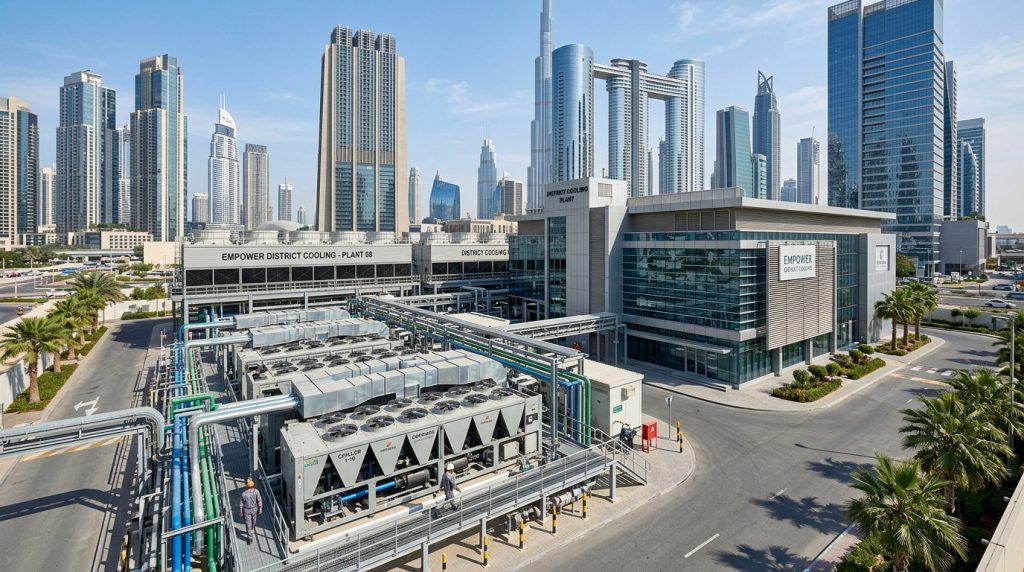
Empower is the Emirates Central Cooling Systems Corporation, a district cooling provider in Dubai. A central cooling plant chills water and pipes it to buildings, and a meter installed in your unit records how much you use. The cooling system replaces the AC unit in each flat. It serves residential buildings in areas such as Jumeirah Lake Towers, Business Bay, Palm Jumeirah and Downtown Dubai, and other providers such as Emicool run similar systems.
Empower charges: what you pay
According to Empower, the district cooling charges for residential customers combine fixed charges and consumption. The table lists the main items reported for a flat. Rates can change, so confirm the current tariff before you sign.
Charge | Amount | Notes |
|---|---|---|
Demand (capacity) charge | AED 750 per RT per year | Fixed, based on the connected load |
Consumption | Metered per RT per hour | Depends on actual usage; confirm the rate |
Meter maintenance | AED 50 a quarter or AED 30 a month | Depends on the building |
Security deposit | AED 2,000 for a flat, AED 3,000 for a villa | Refundable |
Disconnection for non-payment | AED 1,000 | Residential accounts |
Fuel surcharge | Varies | Tied to DEWA fuel pricing |
Take a unit with a 6 RT connected load. The fixed part comes to AED 4,500 a year, or AED 375 a month, before consumption and the 5% VAT. Add summer usage and your actual bill can be much higher. Both consumption and demand charges feed into the total, so ask the owner for last year’s bill before you commit.
Who pays: owner or tenant?
The tenancy contract decides. In many rentals the tenant opens the account and pays directly. In others the landlord includes cooling in the rent, so the cooling cost is included in a higher price. The demand charge continues on an empty flat, which means owners still see bills between tenants.
Before you sign, ask in writing who holds the account and whether the previous tenant’s balance is cleared. Unpaid balances can block a new account. Our renting in Dubai guide lists what else to check in a lease.
Chiller-free apartment vs district cooling
A chiller-free apartment has no separate cooling bill. It either has its own air conditioning system or the building bundles the cost into rent or the service charge. The rent looks higher, but you avoid hidden costs such as a summer bill spike.
Is it worth paying more rent for a chiller-free apartment in Dubai? Estimate your yearly cooling cost from your unit’s load and last summer’s usage, then compare it with the extra rent. Large flats that run all day often favour chiller-free units. Arrangements differ across buildings in areas like Al Barsha, so check tower by tower. Dubai residents can also read our guide to service charges in Dubai, since some service fees already include cooling.
How to open an account
- Confirm the building uses district cooling and whose name the account is in.
- Prepare your Ejari-attested lease or proof of ownership, plus Emirates ID, visa and passport.
- Clear any balance on your other active accounts.
- Submit the documents and pay the refundable security deposit.
Do this alongside your DEWA setup. Our DEWA move-in guide covers DEWA electricity and water, and the cooling account is separate.
Payment methods and late payment
Empower offers several payment methods: bank deposits, online and mobile banking, cheques at service counters, cash through approved exchange houses and card payments online. Make bill payment a habit. Missed payments can lead to disconnection, a AED 1,000 fee and a wait for service to return in the hottest months.
How to reduce your cooling bills
- Raise the thermostat a few degrees and use ceiling fans.
- Close blinds on sun-facing windows by day.
- Ask the building to service the fan coil unit, since poor maintenance costs money.
- Lower usage when the flat is empty for weeks.
Check the meter reading against your statement. A wrong reading is easier to fix early.
Moving out
Ask to close the account, pay the final bill and claim your deposit. Do this before you ask your landlord for the rent deposit, because many want proof the cooling account is clear. Our guide to the security deposit in Dubai explains what a landlord can deduct. Landlords should also read how to rent out property in Dubai, because the cooling account is part of the handover.
Frequently asked questions
What is Empower in the UAE?
Empower is a district cooling provider in Dubai. It supplies chilled water from central plants to residential and commercial buildings, charges a fixed demand fee plus metered use, and bills customers separately from DEWA. Many towers in Business Bay, JLT and Palm Jumeirah use it.
What does chiller-free mean?
Chiller-free means there is no separate district cooling bill. The unit either has its own AC or the cooling cost is already built into rent or service charges. Confirm in writing which applies, because rent can look higher for that reason.
Do tenants or landlords pay the chiller bill?
The tenancy contract decides. Many tenants pay directly, and some landlords include cooling in the rent. Owners stay responsible for vacant units. Agree the arrangement in writing before you sign and ask to see the latest bill.
How much is the Empower security deposit?
The reported refundable deposit is AED 2,000 for a flat and AED 3,000 for a villa, with higher amounts for offices and retail. It is returned after you close the account and settle the final bill. Confirm the current amount before paying.
What happens if I miss a payment?
Cooling can be disconnected for non-payment, with a AED 1,000 fee for residential accounts. Getting service back means clearing the balance and possibly a reconnection charge. Pay on time, and contact the provider early if you dispute a reading.
Check the cooling model before you rent or buy
Ask whether the building uses district cooling, who pays and what the latest bill was. The provider sets rates and they can change, so always verify on its official channels. This is general information, not legal or financial advice. Explore more Dubai real estate guides on Live In Gulf.