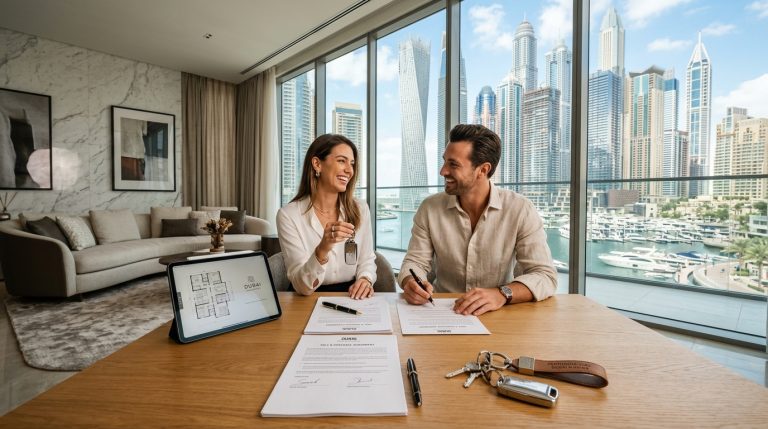
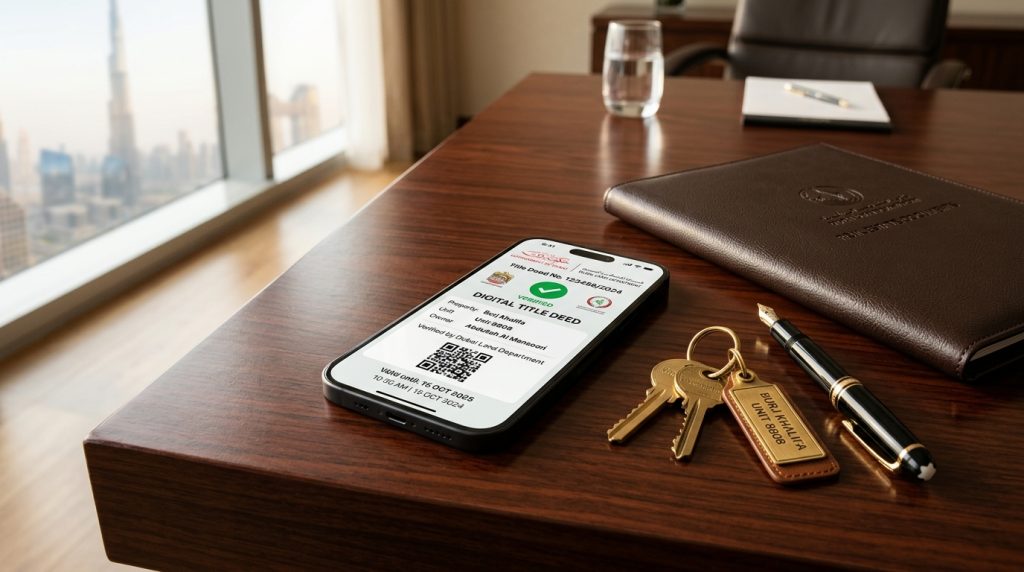
A title deed in Dubai is the official certificate of title issued by the Dubai Land Department (DLD) that proves who owns a property. It is issued in the owner's name when a sale is registered, and today it is issued as an electronic title deed you can download through the Dubai REST app. Anyone can check a title deed is genuine using the DLD's free verify title deed service, which needs only the title deed number, the year and the property type.
This guide explains what a Dubai title deed shows, how to obtain a title deed after buying, how to verify a title deed before you pay a seller, the fees, and what to do if yours is lost or wrong. For the wider purchase process, see our guide to buying property in Dubai.
What Is a Title Deed in Dubai?
The title deed is the proof of ownership for real estate in Dubai. It is issued by the Dubai Land Department (دائرة الأراضي والأملاك) once a property registration is complete, and the DLD's property register is the final word on who owns what. Banks, buyers, tenants' agents and government bodies all rely on it.
Under Dubai Law No. 7 of 2006 on real property registration, ownership only passes when the transfer is recorded with the DLD. That is why a signed contract on its own is not enough: until the title deed is issued in your name, you are not the legal property owner.
What Information Does a Dubai Title Deed Contain?
A standard title deed shows:
• The title deed number and year of issue
• The owner's name (or owners' names and their shares)
• The property type: land, building or unit
• Community, plot number, building name and unit number
• Area in square metres or square feet
• Any mortgage registered against the property
• A QR code you can scan to confirm the deed is genuine
Types of Title Deed in Dubai
The type of title deed depends on what you own and how it was bought:
Type | When it is used |
Title deed for a unit | Apartments and units in a building with shared areas |
Title deed for land or a villa | Plots and villas, including the land |
Oqood (interim registration) | Off-plan property before completion; converts to a full title deed at handover |
Leasehold or usufruct registration | Long leases in non-freehold areas |
If you buy off-plan, you will hold an Oqood certificate until the building is finished. Our guide to Oqood in Dubai explains how it converts into a title deed issued in your name at handover.
How to Get a Title Deed After Buying Property in Dubai
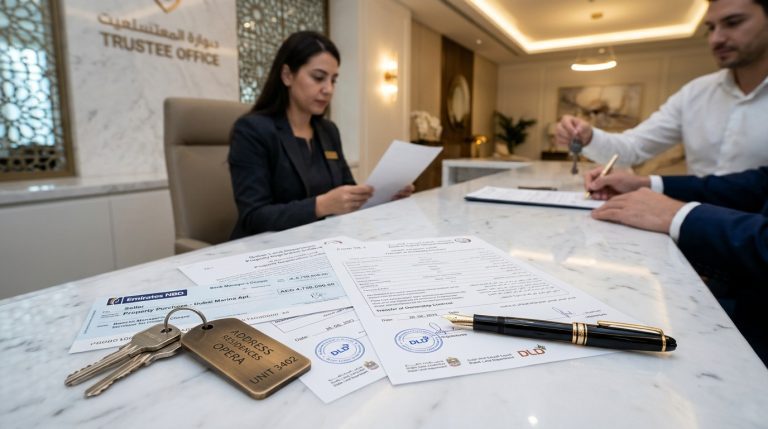
For a ready property, title deed issuance happens on transfer day. Once the buyer, seller and trustee complete the registration procedures, the DLD issues the new title deed electronically, usually the same day. You do not need to apply separately.
1. Complete the transfer at a DLD-approved registration trustee office.
2. Pay the transfer and title deed fees (see below).
3. Receive the new electronic title deed by email or SMS link.
4. Download it any time from the Dubai REST app or the DLD website.
For off-plan, the developer applies to convert your Oqood into a title deed once the building completion certificate is issued and you have paid in full. If you have a mortgage, the bank's charge is recorded on the deed.
How to Get a Digital Title Deed
Dubai has moved to a fully electronic title deed system. To download yours:
1. Install the Dubai REST app and log in with UAE Pass (or your registered details).
2. Go to your properties list.
3. Select the property and open the title deed.
4. Download or share the PDF.
The new electronic title deed has the same legal standing as the old printed certificate. Older paper deeds remain valid, and owners can request an electronic copy.
How to Verify a Title Deed in Dubai
Verification is the single most important check before you hand money to a seller. Fraudsters have used fake or altered deeds to "sell" properties they do not own, so never rely on a scan or photo alone.
Using the DLD website
1. Go to the title deed verification service on the DLD website.
2. Choose the property type: land, building or unit.
3. Enter the title deed number and year.
4. Submit. The result confirms whether the deed is genuine and current.
Using the Dubai REST app
The app offers the same verify title deed service. You can also scan the QR code on an electronic deed to confirm it matches the DLD's deed records.
Where to find the title deed number
The number and year appear at the top of the deed. If you only have a property address, ask the seller or agent for a copy; a genuine seller will share it. The title deed number and year are what you need to check a title deed on any official channel.
Our practical tip: run the check yourself, not through the seller's agent, and repeat it shortly before transfer day, because a mortgage or ownership change could be registered in between.
Title Deed Fees in Dubai
Title deed fees are small compared with the 4% transfer fee. Expect roughly:
• Title deed issuance on transfer: a few hundred dirhams, commonly quoted at about AED 250 to AED 580 depending on property type and service.
• Verification: free online.
• Replacement or modification: a separate service fee set by the DLD.
Check the current schedule on the DLD website before you transfer. Our guide to the DLD transfer fee lists the other government fees due on the same day.
Lost Title Deed or Incorrect Details
With electronic title deeds, losing the document is no longer a crisis: download it again from Dubai REST. If you hold an old paper deed and lose it, apply to the DLD for a replacement; you may need a police report or an affidavit, depending on the case.
If your name, the unit area or other details are wrong, apply for a title deed modification through the DLD's real estate services. Fix errors early, because a mismatch between your passport and your deed can delay a future sale, mortgage or property visa application.
Can Foreigners Get a Title Deed in Dubai?
Yes. Foreigners buying in designated freehold areas receive the same title deed as UAE nationals, in their own name, with permanent ownership. Outside freehold zones, a foreign buyer's long lease is registered instead. Our list of freehold areas in Dubai shows where full ownership in Dubai is open to all nationalities.
Frequently Asked Questions
What is a title deed in Dubai?
It is the official proof of ownership for a property, issued by the Dubai Land Department after a sale is registered. It shows the owner's name, the property details and any mortgage. Since the move to electronic title deeds, you can download it from the Dubai REST app or the DLD website.
How can I get a copy of my title deed in Dubai?
Log in to the Dubai REST app with UAE Pass, open your properties list and download the title deed as a PDF. You can also request a copy through the DLD website. If you hold an old paper deed, you can ask the DLD to issue an electronic version.
How much does it cost to get a title deed in Dubai?
The title deed issuance fee is a few hundred dirhams, commonly quoted between AED 250 and AED 580 depending on the property and service. It is paid on transfer day with the 4% DLD transfer fee and trustee charges. Checking a title deed online is free.
How do I verify a title deed in Dubai?
Use the DLD's title deed verification service online or in the Dubai REST app. Select the property type, enter the title deed number and year, and submit. You can also scan the QR code on an electronic deed. Always verify independently before paying any money to a seller.
Keep Your Dubai Title Deed Safe and Up to Date
Download a copy of your title deed in Dubai as soon as the transfer is done, check every detail against your passport, and verify the title of any property you plan to buy before signing Form F. It takes two minutes online and is the simplest protection against fraud in the real estate sector.
Fees and procedures are set by the Dubai Land Department and may change. Confirm current details on the DLD website before relying on them.