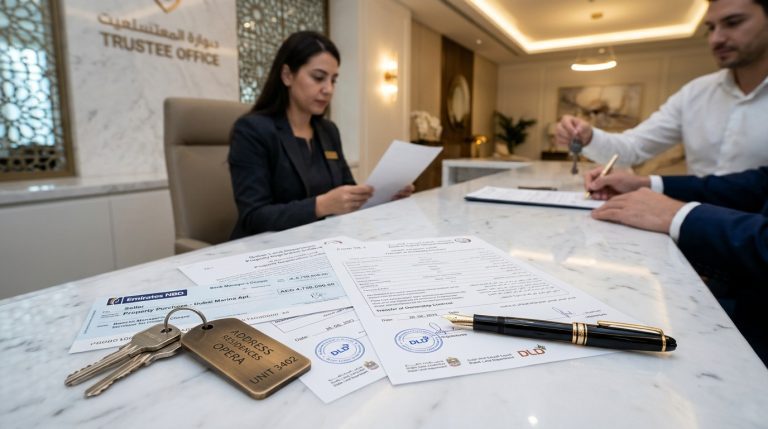
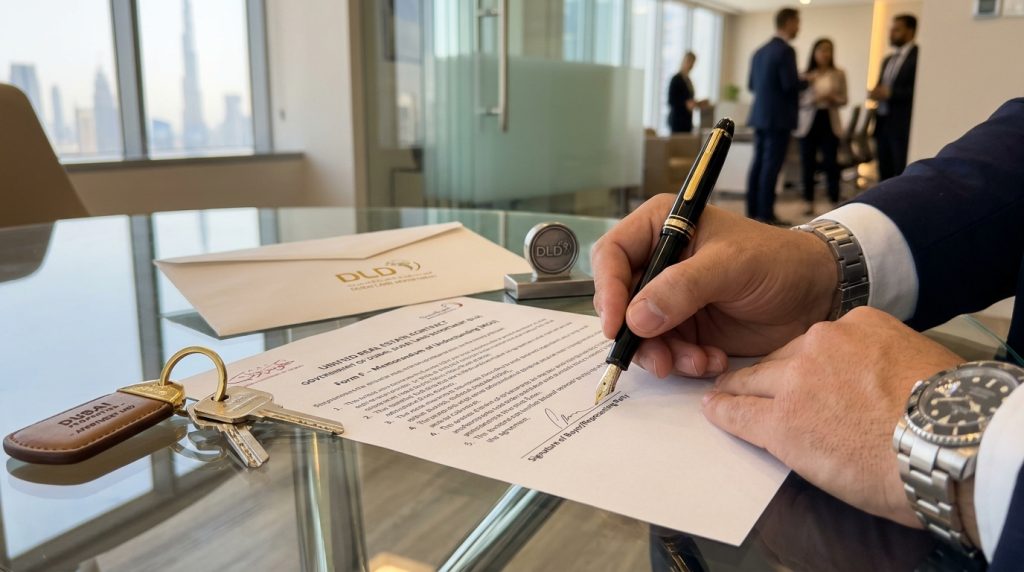
Form F is the standard property sales contract for resale property in Dubai. Issued by the Dubai Land Department (DLD) and known as Contract F or the MOU (memorandum of understanding), it records the agreement between buyer and seller: the purchase price, the deposit, the transfer date, who pays which fees and what happens if either side pulls out. Once both parties sign Form F, it is legally binding. The buyer usually gives a 10% deposit cheque, held until the property transfer.
Whether you are buying or selling, this guide explains what Form F covers, how it is created on Dubai REST, what happens to the deposit if a deal collapses, and the clauses buyers should check before signing. For the whole purchase journey, see our guide to buying property in Dubai.
What Is Form F in Dubai?
Form F is the unified real estate sale contract the DLD requires for secondary market property transactions in Dubai. Every resale transaction in the Dubai real estate market that goes through a broker uses it. It replaced the loose, agent-drafted MOUs that were common years ago, so every resale now follows the same standard form. It is generated through the Dubai Land Department's systems, usually by a RERA-licensed real estate broker, and signed by both parties, the seller and buyer.
Form F is one of a set of DLD contracts that cover a property sale from start to finish:
Form | Between | Purpose |
Form A | Seller and broker | Listing agreement |
Form B | Buyer and broker | Buyer agency agreement |
Form I | Broker and broker | Commission split between agencies |
Form F | Buyer and seller | The sale contract itself |
Off-plan purchases from a developer do not use Form F. They use the developer's sale and purchase agreement, registered on Oqood. Our guide to Oqood in Dubai covers that route.
What Information Does Form F Include?
A Form F contract sets out:
• Parties: buyer and seller names, passport or Emirates ID details, and any power of attorney.
• Property details: community, building, unit number and title deed number.
• Purchase price and how it will be paid: cash, mortgage or both.
• Deposit: amount (usually 10%) and who holds the deposit cheque.
• Transfer date: the deadline for completing the property transfer at a trustee office.
• Fees: who pays the 4% DLD fee, agency commission and the developer NOC.
• Tenancy: whether the property is tenanted, with the tenancy contract information and how the lease is handled.
• Default terms: what happens if the buyer or seller fails to complete.
• Addendum: any extra conditions both sides agree, such as a mortgage condition or furniture included.
How to Create Form F on Dubai REST
In most deals, the broker prepares Form F, but the transaction runs through the DLD's systems, which is what makes Dubai property transactions traceable:
1. The broker logs in to the DLD's broker portal or the Dubai REST app and starts a new Contract F.
2. Buyer, seller and property details are entered, with the price, deposit and transfer date.
3. The system checks the property against the DLD's records, including the title deed and any mortgage.
4. Buyer and seller review and sign, usually digitally through UAE Pass or in person at the broker's office.
5. Once signed by both parties, the signed Form F is recorded and both sides receive a copy.
Private sales without a broker can still use Form F, but you will usually need a conveyancer or registration trustee to prepare it.
Is Form F Legally Binding?
Yes. Once Form F is signed by both parties, it is a binding sale contract for the property transaction. Neither side can simply walk away without consequences, and changes need amendments to Form F signed by both buyer and seller.
What happens to the deposit if the deal falls through?
• If the buyer defaults without a valid reason under the contract, the seller can usually keep the deposit as compensation.
• If the seller defaults, for example by refusing to transfer, the buyer usually gets the deposit back plus compensation set out in Form F, often equal to the deposit amount.
• If a condition fails, such as a mortgage refusal where Form F includes a finance condition, the deposit is normally returned.
A failed transaction is expensive for both sides. Disputes that cannot be settled go to the DLD's dispute settlement channels or the courts. Get legal advice early if you think the other side will not complete.
What to Check Before You Sign Form F
Most problems Dubai brokers see come from clauses nobody read. Before you sign:
1. Verify the title deed. Confirm the seller's name and the unit details using the DLD's verify title deed service. Our guide to the title deed in Dubai shows how.
2. Check for a mortgage. If the property is mortgaged, Form F should say how the seller's loan will be cleared before transfer.
3. Add a finance condition. If you are borrowing, make the sale conditional on mortgage approval and valuation. Without it, you can lose your deposit if the bank says no.
4. Agree who pays the DLD fee. The default is buyer pays 4%, but it is negotiable. Our guide to the DLD transfer fee explains the split.
5. Set a realistic transfer date. Cash deals often complete in about 30 days; with a mortgage, allow more.
6. Check the tenancy. If the property is tenanted, confirm the lease end date and whether you are buying with the tenant in place.
7. Confirm service charges are paid. The seller needs a developer NOC, which requires outstanding service charges to be cleared.
Our view, after watching many transactions: never sign Form F before you have mortgage pre-approval, and always insist on a finance clause. It costs nothing and protects your 10%.
Who Holds the Deposit Cheque?
The buyer's deposit cheque, usually 10% of the purchase price, is normally made out to the seller and held by the broker until transfer day. Some deals use a trustee or a conveyancer's account instead. On transfer, the cheque is either handed to the seller as part of the payment or returned to the buyer in exchange for a manager's cheque for the full amount. Make sure Form F states clearly who holds it and when it is released.
After Form F: The Next Steps
Once Form F is signed, the transaction moves to its final stage. The seller applies to the developer for a no objection certificate, the buyer finalises the mortgage if needed, and both sides book a transfer appointment at a registration trustee office. On the day, the DLD fees are paid and the new title deed is issued in the buyer's name. If you are financing, our guide to the mortgage in Dubai for expats explains the bank's part of the timeline.
Frequently Asked Questions
What is a Form F in Dubai?
Form F is the standard sale contract for resale property in Dubai, issued through the Dubai Land Department's systems and also called Contract F or the MOU. It records the price, deposit, transfer date, fees and default terms agreed between buyer and seller, and it becomes binding once both parties sign.
How do I create Form F on Dubai REST?
A RERA-licensed broker usually creates it through the DLD's broker systems or the Dubai REST app by entering the buyer, seller, property and payment details. The system checks the property against DLD records. Both parties then sign, often digitally with UAE Pass, and receive a copy of the signed Form F.
Can Form F be cancelled after signing?
Only by agreement between buyer and seller, or under the conditions written into the contract, such as a failed mortgage condition. If one side simply walks away, the default clauses apply: a buyer can lose the deposit, and a seller can owe the buyer compensation. Take legal advice if a dispute arises.
How much is the deposit on Form F?
The standard deposit is 10% of the purchase price, paid by the buyer as a cheque usually held by the broker until transfer. The amount can be negotiated and must be written into Form F, along with who holds it and the conditions for its release or forfeiture.
Signing Form F in Dubai With Confidence
Form F in Dubai protects both sides of a Dubai property deal only if the details are right. Verify the title deed, add a finance condition if you are borrowing, agree the fee split in writing, and set a transfer date you can meet. Read the full contract before you sign, and if anything is unclear, ask a property lawyer to review it. The Dubai Land Department publishes the official contract templates and transfer requirements.
This article is general information, not legal advice. Contract terms and DLD procedures can change; confirm details with a licensed broker or lawyer before signing.