
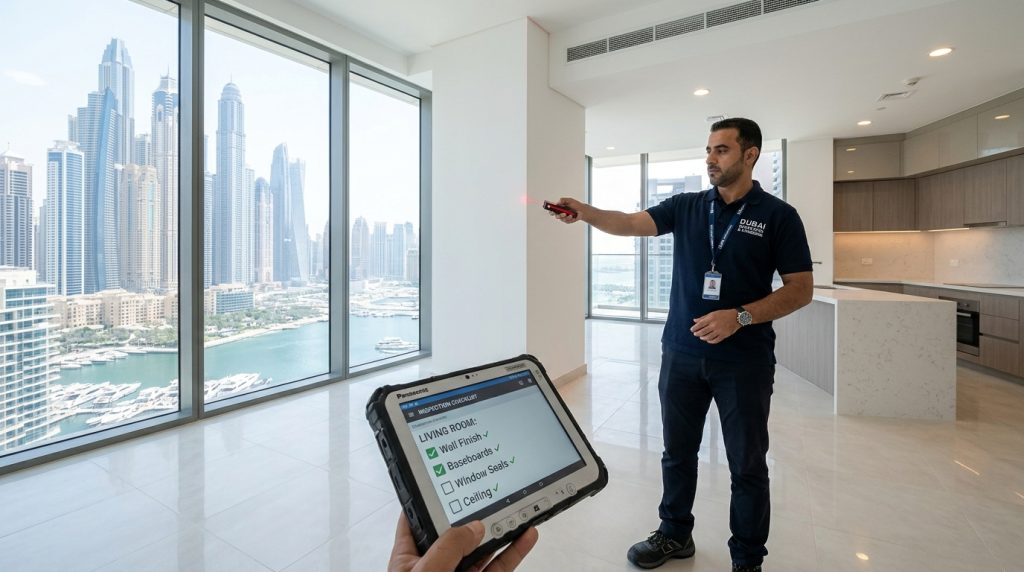
Snagging in Dubai means inspecting a newly built property for defects before you accept handover from the developer, so the developer fixes them at its own cost. A snag is any fault, from a cracked tile or a leaking pipe to faulty air conditioning or poor waterproofing. You can do a basic check yourself, but most buyers hire a professional snagging company, which uses tools such as thermal imaging and moisture meters and gives you a detailed report to send to the developer. Book the inspection before you sign the handover.
This guide covers what a snagging inspection checks, what it costs, when to book it, a handover checklist you can use yourself, and what happens after the report. If you are still at the buying stage, see our guide to buying property in Dubai.
What Does It Mean to Snag a Property in Dubai?
Snagging is a property inspection carried out at the end of construction to find defects the developer should put right. It is most common on off-plan homes at handover, but it also makes sense for a ready property bought from a developer, and for older homes before you buy them, where it is closer to a home inspection.
The inspection produces a snag list: every defect, its location, a photo and a description. Each snag is numbered so the developer can track it. The developer then repairs the items, and you check the work in a re-inspection before or shortly after taking the keys.
Why Property Snagging Matters
Once you accept handover without noting a snag, it becomes harder to argue that a problem was there from the start. A thorough inspection protects your investment in three ways:
• The developer pays. Every snag listed at handover is fixed at no cost to you.
• Hidden problems surface early. Leaks behind walls, hollow tiles or poor insulation are far cheaper to fix before you move in or furnish.
• You have evidence. A dated inspection report supports any later claim under the developer's warranty.
What a Snagging Inspection Checks
A professional snagging team will inspect hundreds of points, and a good inspector records every snag, however small. The main areas:
Area | Typical snags |
Walls, ceilings and paint | Cracks, uneven finishes, damp patches |
Floors and tiles | Hollow tiles, chips, uneven levels, poor grouting |
Doors and windows | Gaps, misaligned frames, faulty locks, failed seals |
Plumbing | Leaks, low water pressure, slow drainage, loose fittings, poor plumbing joints |
Electrical | Dead sockets, wrong wiring, missing earthing, faulty lights |
MEP and air conditioning | Weak cooling, noisy units, blocked drains, poor airflow |
Wet areas | Waterproofing failures, poor sealant around baths and showers |
Kitchen and fitted items | Cabinet alignment, appliance faults, worktop damage |
Balconies and outdoor areas | Drainage falls, railing fixings, villa roof and garden defects |
Professional inspectors also use thermal imaging to find hidden moisture and missing insulation, moisture meters for damp, and tapping tools to find hollow tiles that look fine on the surface.
How Much Does Snagging Cost in Dubai?
Snagging prices depend on the property type and size, and on how much the snagging service includes. Companies usually price by unit size or square footage, with a studio or one-bedroom apartment at the low end and large villas costing several times more. As a rough guide, expect anything from around AED 1,000 for a small apartment to several thousand dirhams for a big villa. Re-inspections are often discounted or included.
Compare at least three quotes from each inspection company you shortlist and check exactly what is included: thermal imaging, a written report, photos for each defect, and a re-inspection.
Is It Worth Paying for a Snagging Survey?
In most cases, yes. The fee is small next to the price of the property and the cost of repairing a single hidden leak or failed waterproofing after the warranty ends. A professional inspector also knows which snag types developers typically miss and how to describe them so they get fixed.
Our view: for a new villa or a large apartment, professional snagging is highly recommended. For a small studio from a developer with a strong track record, a careful self-inspection using the checklist below can be enough, especially if your budget is tight.
When to Book a Snagging Inspection
Book your snagging inspection in Dubai as soon as the developer sends the handover notice and before you sign the handover documents. Many developers give buyers access to the unit for a pre-handover inspection; ask for a date in writing. A typical apartment inspection takes a few hours, and many companies send the inspection report within 24 hours, most within 48.
Can a developer refuse a snagging inspection? Developers generally allow buyers or their inspectors to view the unit before handover, though they may set times and access rules. If you are refused, put your request in writing and do not sign anything that states you accept the unit in its current condition.
DIY Handover Checklist
If you plan to inspect the property yourself, take a torch, a phone charger to test sockets, a small spirit level, tape and a notebook. Then:
1. Run every tap and shower for a few minutes, then check under sinks and around drains for leaks.
2. Flush every toilet and watch for slow refills or running water.
3. Switch on all lights and test every socket.
4. Run the air conditioning in every room for at least 30 minutes and check cooling and noise.
5. Open and close every door, window and cabinet. Check locks and seals.
6. Tap floor and wall tiles; a hollow sound means poor bonding.
7. Look for cracks, stains and uneven paint, especially near windows and ceilings.
8. Check balcony drainage by pouring water and watching where it runs.
9. Test kitchen appliances, extractor fans and the water heater.
10. Photograph every snag and mark it with tape so you can find it again at re-inspection.
After the Snagging Report
1. Send the report to the developer in writing and ask for a repair timeline.
2. Book a re-inspection once the developer says each snag is fixed, and inspect the repairs yourself too.
3. Sign handover only when you are satisfied, or record outstanding items on the handover form.
4. Keep everything. Photos, emails and the report support later claims.
After handover, the defect liability period begins. Developers usually cover fixtures and fittings for one year, and the main structure carries a much longer liability, commonly ten years under UAE law. Report any new defect within these periods in writing. Ask your developer for the exact warranty terms, because they can vary. Common-area defects are handled through the owners' association and paid from service charges, so check the building's maintenance record too.
Snagging is also the final step of the off-plan process. Our guides to Oqood registration and the title deed in Dubai cover what happens to your registration at handover.
How to Choose a Snagging Company in Dubai
• Check that the property snagging company in Dubai is licensed and carries professional insurance. Many operate across the UAE, including Abu Dhabi.
• Ask for a sample inspection report and look for clear photos and a description of each snag.
• Confirm that thermal imaging and a re-inspection are included.
• Read recent reviews from buyers in your community or the same developer's projects.
• Avoid companies that also sell repair services without telling you, as it can bias the report.
Frequently Asked Questions
How much does snagging cost in Dubai?
It depends on the property type and size. Small apartments are at the lower end, often around AED 1,000, while large villas can cost several thousand dirhams. Prices usually include a written report with photos, and many companies include or discount a re-inspection after the developer fixes the defects.
What does it mean to snag a property in Dubai?
It means inspecting a newly built home for defects before accepting handover from the developer. The inspection produces a snag list of every fault, with photos and locations. The developer then repairs the items at its own cost, and you check the repairs before or soon after you take the keys.
Is it worth paying for a snagging survey?
Usually, yes. The fee is small compared with the value of the property, and a professional with thermal imaging can find hidden leaks, damp and hollow tiles you would miss. Defects found before handover are fixed by the developer; those found later can be harder and more expensive to resolve.
When should I book a snagging inspection?
Book it as soon as the developer sends the handover notice, and before you sign the handover documents. Ask the developer for an access date in writing. Most inspections take a few hours, and the report usually arrives within one or two days.
Make Snagging in Dubai Part of Every Handover
Property snagging in Dubai is one of the cheapest forms of protection you can buy for a new home. Book the inspection early, log every snag, send the report in writing, check the repairs, and only then sign. If you bought off-plan and are still weighing your options for the next purchase, our comparison of off-plan vs ready property in Dubai sets out the trade-offs.
Prices and warranty terms vary by company and developer. Confirm details in writing before relying on them, and check developer obligations with the Dubai Land Department.