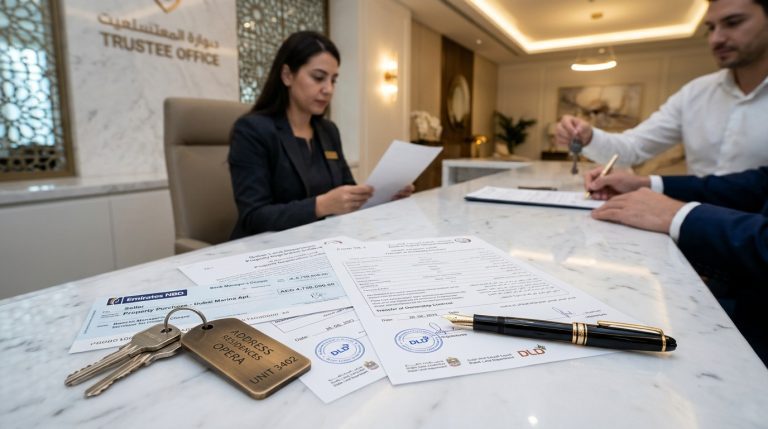

Yes, foreigners can buy property in Dubai, and you do not need to live in the UAE to do it. Any nationality can buy freehold property in the emirate's designated freehold areas, whether an apartment, villa or townhouse, in their own name, with permanent ownership registered by the Dubai Land Department. A passport is enough for a cash purchase, you can complete the deal from abroad through a power of attorney, and you do not need a UAE bank account to buy, although having one makes the transfer and running costs much easier.
This guide covers the ownership rules for anyone looking at property in Dubai for foreigners, what changes if you are a non-resident, the documents and bank set-up you need, the taxes to think about at home, and the drawbacks worth knowing. For the full buying process, step by step, see our guide to buying property in Dubai.
Who Can Buy Property in Dubai as a Foreigner?
Foreign nationals can buy property in Dubai whatever their country of residence, with only a few practical limits:
• Any nationality can buy freehold properties and other residential properties in designated areas. There is no list of approved countries.
• Residents and non-residents have the same ownership rights, so you do not need to live in Dubai to invest in property here. Residency only changes your mortgage terms.
• Individuals and companies can both own property. Companies usually need to be set up in a free zone that allows property ownership, or buy through an approved structure.
• Minimum age: buyers sign as adults; property for a minor is usually held through a guardian.
The legal basis is Dubai Law No. 7 of 2006 on real property registration, which gave non-UAE nationals the right to own property in areas designated by the Ruler. The UAE government portal u.ae sets out the same rule for expatriates.
Where Can Foreigners Buy Property in Dubai?
Only property in designated freehold areas is open to foreign ownership in Dubai. These cover the communities most property investors look at anyway, including Downtown Dubai, Dubai Marina, Palm Jumeirah, Business Bay, JVC, Dubai Hills Estate, Arabian Ranches and Dubai Creek Harbour. Our list of freehold areas in Dubai covers the rest.
Outside freehold zones, foreigners are usually limited to two long-term rights rather than outright ownership:
• Usufruct: the right to use and benefit from a property for up to 99 years, without owning the land.
• Musataha: the right to build on and use land for up to 50 years.
What Happens to Your Property in Dubai After 99 Years?
This question comes up often, and the answer depends on what you buy. It is one of the most misunderstood points about property ownership in Dubai. If you buy freehold, nothing happens after 99 years. Freehold ownership has no expiry date; the property is yours, and then your heirs', indefinitely.
The 99-year limit applies only to leasehold and usufruct interests. At the end of the term, the right to use the property returns to the freeholder unless the lease is renewed. That is why leasehold values fall as the remaining term shrinks, and why we recommend freehold for almost every foreign buyer.
Do You Need a Visa or Residency to Buy?
No. You can buy property in Dubai on a tourist visa or from overseas, without ever living here. Residency matters in three places:
• Mortgages: residents get better loan terms than non-residents.
• The DLD First-Time Home Buyer Programme is open only to UAE residents.
• Property visas: buying can itself make you eligible for residency. A property can support a two-year investor visa, and homes worth AED 2 million or more can qualify for the Golden Visa through property.
Documents Foreign Buyers Need
For a cash property purchase, the list is short:
• Valid passport (and Emirates ID if you are a resident)
• Signed Form F (resale) or Sale and Purchase Agreement (off-plan)
• Manager's cheques or proof of funds for the price and fees
• Power of attorney if someone signs or attends the transfer for you
Mortgage buyers also need income proof, bank statements and, for non-residents, often a credit report from their home country. Developers and every licensed real estate agent will also run standard anti-money-laundering checks, so expect to show where the money comes from.
Do You Need a UAE Bank Account?
Not legally, but it helps a lot. On a resale, the price and the Dubai Land Department fees are usually paid by manager's cheques drawn on a UAE bank, so a local account makes transfer day far simpler. Afterwards, you will pay service charges and DEWA bills, and receive rent if you let the property, all easier with a local account.
Non-residents can open a UAE non-resident bank account with several banks, though the minimum balance requirements and paperwork vary. The alternative is to send funds to the developer's escrow account (off-plan) or to a conveyancer's account, who then arranges the cheques. Whichever route you choose, only ever pay into accounts you have verified independently.
Can Foreigners Get a Mortgage in Dubai?
Yes. Resident expats can typically borrow up to 80% of the value of a first home worth AED 5 million or less. Non-residents can borrow too, but from fewer banks and usually only 50% to 65% of the value, with higher income requirements. Our guide to the mortgage in Dubai for expats covers eligibility and fees.
How Much Money Do You Need to Buy a House in Dubai?
There is no minimum property price for foreign buyers, and property prices in Dubai cover a huge range. A studio apartment in an outer freehold area can trade well below AED 1 million, while villas in prime communities run into the tens of millions. The right property for you depends on your budget and whether you want to live in Dubai or rent it out. Whatever the price, budget for:
• The purchase price (or your deposit, if borrowing: at least 20% for residents, more for non-residents)
• The 4%DLD transfer fee
• Agency commission of around 2% plus VAT on resale
• Trustee, title deed and, if financed, mortgage registration and bank fees
As a rule of thumb, add 7% to 8% to the price for costs.
Taxes for Foreign Property Owners
Dubai does not charge annual property tax on property value, income tax on personal rental income, or capital gains tax on an individual's property sale. That is a big part of the appeal for investors.
The catch is your home country. Many countries tax their residents on worldwide income and gains, so rental income or profit from a Dubai property may be taxable where you live. The United Kingdom, for example, generally taxes UK residents on overseas rental income. Get advice in your own country before you buy, because the tax position there often matters more than the one in Dubai.
Disadvantages of Buying Property in Dubai
The benefits of buying property here are well known: no annual property tax, freehold title and visa options. The drawbacks get less attention. Weigh these before you buy:
• High transaction costs. At 7% to 8% to buy and around 2% to sell, short-term flipping rarely pays.
• Market cycles. The Dubai real estate market has had sharp booms and corrections, and the property market can turn quickly. Prices can fall as well as rise.
• Service charges. High-amenity towers can carry heavy annual charges that eat into rental income.
• Supply risk. Large new launches can push down rents and resale prices in specific communities.
• Inheritance. Without a registered will, the succession of a non-Muslim foreigner's Dubai property can become complicated. Our guide to property wills in Dubai for expats explains how to protect your family.
Our view: these risks are manageable for anyone who wants to invest in Dubai long term, if you buy in an established community, hold for five years or more, and keep a cash buffer for vacancies and repairs.
Frequently Asked Questions
Can I buy property in Dubai as a foreigner?
Yes. Foreigners of any nationality can buy freehold property in Dubai's designated areas, with permanent ownership registered by the Dubai Land Department. You do not need a residence visa. You can complete the purchase in person or remotely through a power of attorney, and you can finance it with a UAE mortgage.
Can non-residents buy property in Dubai?
Yes. Non-residents have the same ownership rights as residents. The differences are practical: mortgages are harder to get and smaller, the DLD's First-Time Home Buyer Programme is for residents only, and opening a UAE bank account takes more paperwork. Many non-residents buy off-plan on developer payment plans instead.
What are the disadvantages of buying property in Dubai?
The main ones are high upfront costs of around 7% to 8%, a cyclical market, service charges that can be steep in some towers, and supply risk in communities with many new launches. Foreign owners should also check tax in their home country and register a will to avoid inheritance complications.
Do foreigners pay property tax in Dubai?
No. Dubai has no annual property tax and no capital gains tax on property for individuals. Buyers pay a one-off 4% DLD transfer fee, and owners pay annual service charges. Your home country may still tax your Dubai rental income or gains, so check locally.
So, Can Foreigners Buy Property in Dubai Safely?
Yes. To buy a property in Dubai safely as a foreigner, stick to freehold areas, use a RERA-licensed agent or buy direct from a registered developer, pay only into verified escrow or trustee accounts, and register the transfer properly. If you are still choosing the type of property, compare off-plan vs ready property in Dubai before you commit.
This article is general information and not legal or tax advice. Ownership rules and fees can change; confirm details with the Dubai Land Department and a qualified adviser before buying.